Forklift Steering Systems
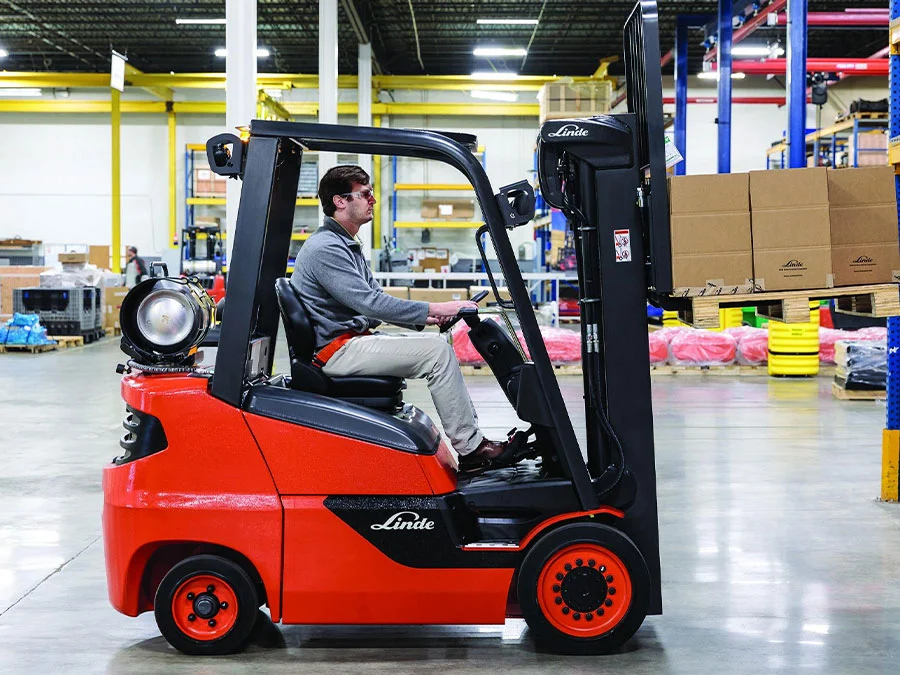
Custom gearbox units for electric and engine-powered forklifts, where steering response, bidirectional efficiency, sealing reliability and compact installation space need to work together under frequent reversing duty.
A gearbox is not simply a housing filled with gears. The ratio may be the first number on the drawing, but torque, backlash, bearing support, lubrication, sealing, mounting and duty cycle decide whether the finished drive works quietly and keeps working.
YUBAO manufactures drawing-based gear units for OEM applications. Depending on project scope, the assembly can combine YUBAO-made gears, gear shafts, spline shafts, worms, worm wheels and shaft sleeves with specified purchased bearings, seals and housings. Manufacturing and assembly are planned around the motor, output load, installation space and service environment.
These values describe a reference gearbox platform for preliminary review. Final performance depends on gearbox architecture, ratio, duty cycle, lubrication, thermal conditions and the agreed test method.
A useful gearbox starts with the working relationship between torque, speed, ratio, interfaces, lubrication, sealing and service life—not a generic housing size.
A useful gearbox starts with what the machine has to do: continuous torque, peak or stall torque, input speed, reversing frequency, shock load, operating hours and ambient conditions. Ratio alone cannot define the correct gear set, bearing arrangement or housing.
The motor flange, input shaft, gears, bearings, output shaft, housing and mounting faces all influence alignment. YUBAO reviews these interfaces as one assembly so the manufactured gears and shafts remain related to the parts that support and locate them.
Lubricant type, fill quantity, sealing, noise, temperature range and service interval should be agreed before production. A gearbox intended to run for years without routine service needs a different review from a unit that will be opened and relubricated on a planned schedule.
Reference data for early project screening. Final dimensions, performance, purchased components, lubrication and test methods are confirmed against the released assembly drawing and BOM.
| Feature | Reference Information | Engineering Relevance |
|---|---|---|
| Envelope & Weight | Approx. L400 × W280 × H300 mm · approx. 25 kg | Use as an early packaging reference. Final dimensions, mounting points and whether weight includes lubricant must be confirmed by drawing. |
| Speed & Ratio | Input speed up to 3000 rpm · output speed 72.1 rpm · ratio 41.6:1 | The speed values mathematically match a reduction ratio of approximately 41.6:1. Final ratio tolerance follows the gear train and application. |
| Torque & Power | 0.7 kW input · 110 N·m rated output · 220 N·m peak output | Continuous torque, peak duration, starts per hour, reversing and service factor are required before the gear and bearing route is released. |
| Efficiency & Backlash | Efficiency ≥93% reference · backlash ≤15 arcmin reference | These are architecture-dependent targets, not universal gearbox guarantees. Test speed, load, temperature and measurement method must be agreed. |
| Structure & Materials | ADC12 housing reference · 16MnCr5 gears · NSK or approved bearings · grease or oil lubrication | Housing supply route, gear heat treatment, purchased bearing model, seals and lubricant are controlled by the released BOM. |
| Environment, Noise & Life | −40 to +90 °C operating reference · ≤60 dB(A) at 1 m · 10-year design target · 12,300 h maintenance-free target | IP rating, noise procedure, lubricant life, load cycle and storage conditions must be validated for the actual application. |
The BOM defines which parts are made by YUBAO, which parts are sourced, and which assembly and verification steps are included.

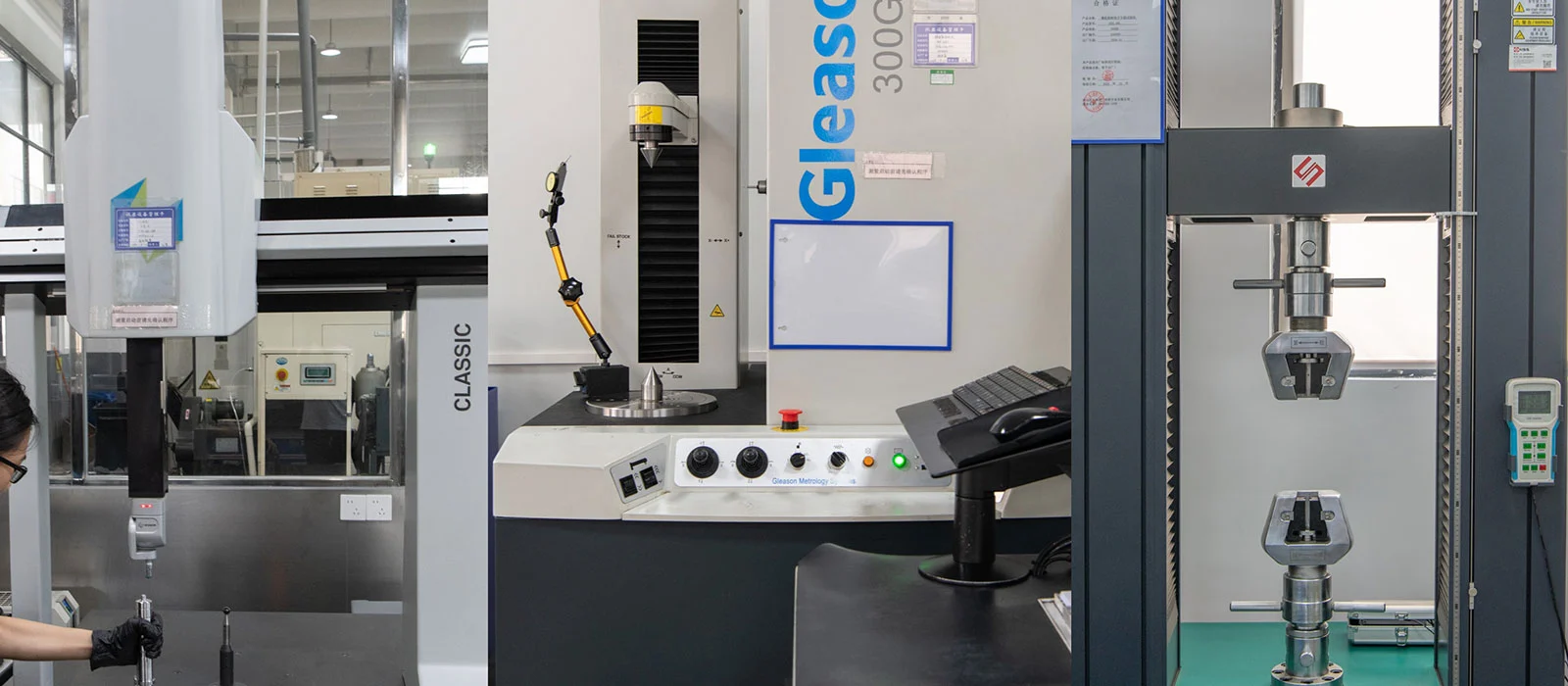
YUBAO's role is strongest when a project needs more than loose gears. The manufacturing scope can combine gear and shaft production, heat treatment, precision grinding and selected housing-interface machining with specified purchased bearings, seals and lubricants.

A gearbox can contain individually acceptable parts and still perform poorly if the mesh, bearings, housing, lubricant or assembly sequence do not work together. The inspection plan therefore follows the finished drive and the customer's acceptance requirements.
YUBAO does not treat every gearbox as the same product. The gear train, housing, motor interface, lubrication and test plan are matched to the load, speed, environment and maintenance strategy shown in the drawing.

Custom gearbox units for electric and engine-powered forklifts, where steering response, bidirectional efficiency, sealing reliability and compact installation space need to work together under frequent reversing duty.

Custom compact gearboxes for servo, DC and motion-control drives, where ratio selection, backlash, torsional stiffness, inertia matching and motor-adapter geometry all affect positioning quality and long-term repeatability.

Gearbox units for mowers and outdoor equipment, developed around shock loading, debris exposure, sealing, lubrication retention, corrosion resistance and stable output under changing field conditions.

Compact gearbox assemblies for door actuation and related rail-access functions, where packaging, service life, vibration adaptation, controlled movement and dependable performance under repeated cycling all matter.
Yes. YUBAO reviews the gear train, shafts, bearings, seals, housing interfaces, lubrication, assembly steps, acceptance tests and expected annual volume before confirming the scope.
Projects can include compact parallel-axis, right-angle, planetary, worm, helical or mixed gear arrangements. Final feasibility depends on ratio, torque, space, precision, duty cycle and the available inspection method.
Yes, when these items are defined in the BOM or approved during project review. Bearings, seals and lubricants are specified purchased components; they are not manufactured by YUBAO.
The target and test method must be agreed first. Gearbox architecture, ratio, lubricant, speed, load and temperature all influence the result, so reference values should not be treated as automatic guarantees.
The required standard and test scope are reviewed against the supplied gearbox boundary. For rail projects, shock and vibration requirements may reference IEC 61373, while electronic-equipment standards apply only when electronics are part of the supplied system.
Send the gearbox assembly drawing, BOM, motor data, ratio, input speed, rated and peak torque, duty cycle, mounting, output-shaft interface, lubricant, sealing, environment, test requirements, prototype quantity and annual volume.